




1
AssociationSupply and confirm script
(Case study) Nonprofit・Polish AI
Public-service films made in 2026 for the Taiwan SPCA on banned dangerous animals, pet microchipping and registration, and long-term caging or chaining. Each topic has its own visual style, carried from script and reference art through shot-by-shot generation to bilingual subtitles.
The same approach suits policy communication, regulatory explainers, brand stories and training videos where accuracy and a consistent look both matter.
(Challenge)
The first film explains the Ministry of Agriculture ban on keeping 641 dangerous animal species in private homes from May 1, 2026, and the registration deadline of April 30, 2027 for existing owners. The second covers the legal duty to microchip and register dogs and cats. The third argues that dogs need walks and company and should not be caged or chained long term.
Legal wording and penalties had to be exact, and animal size, behavior and housing had to meet animal welfare standards, while still holding a general audience. The association supplied and confirmed the script; POLISH turned it into film.

(Approach)
Pre-production starts with a style comparison. Once a style is chosen, character sheets and location references are built, and the rules are written down so each can be checked. In generation, reference art becomes the first frame of each shot. Post-production covers editing, title cards, subtitles and mixing.
Legal title cards are typeset in post, so on-screen text matches the approved copy exactly. Animal proportions and housing follow the association’s specialist input in the storyboard specification.
(Key design)
A 1990s cartoon look makes the regulation approachable, with a Shiba Inu host linking the sections. The raccoon, cobra and crocodile each have fixed character references and appear in Taiwanese streets and arcades, animated on twos. The registration search text and QR code are composited in post so they stay readable. Watch the full film on YouTube
Hand-drawn animation was chosen from three style proposals for its soft line and range of emotion, which suits the lost-and-found scenes. The film is split into 11 segments, each starting from a first-frame image and a fixed prompt structure. Scenes include a temple and a night market, where the dialogue is in Taiwanese, and the host makes cameo appearances in several segments. Watch the full film on YouTube
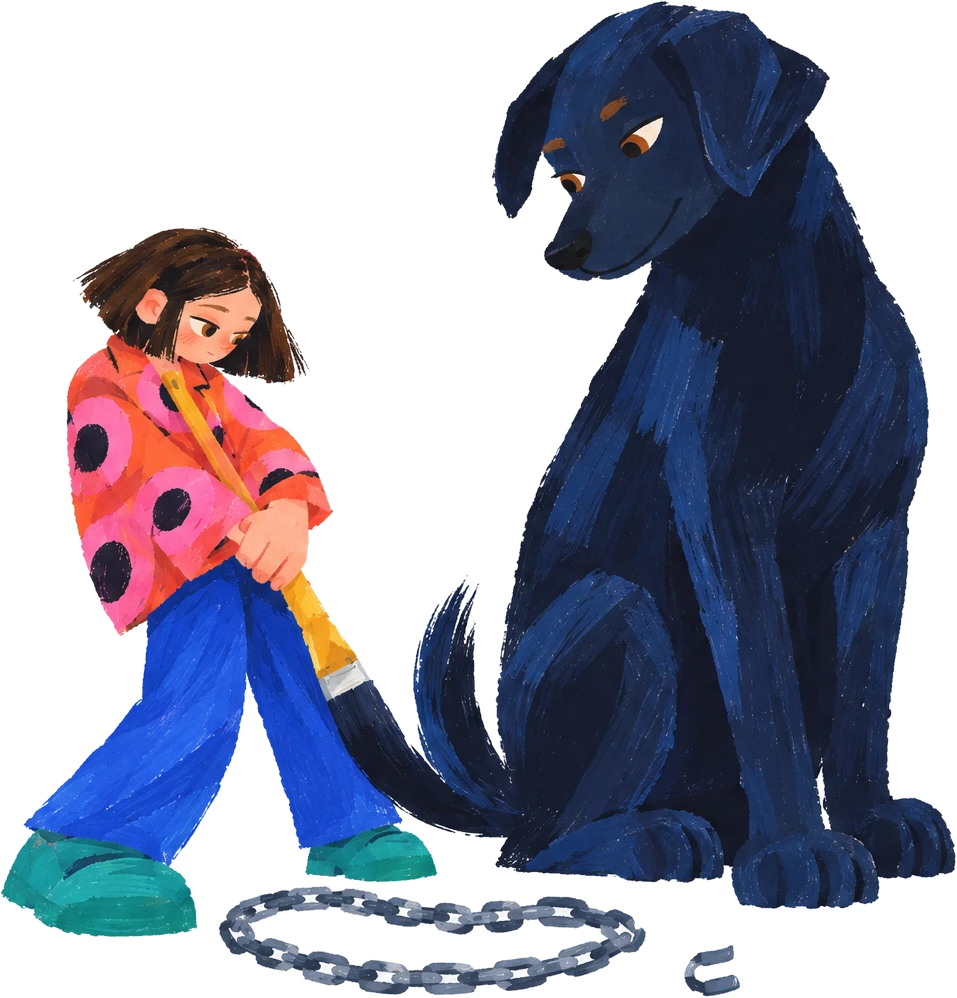
A chained black mixed-breed dog narrates in the first person. The chain allows five steps, and the door is at the sixth, a count that runs through the film. Generated footage is processed uniformly into ink-wash animation at five frames per second. Separate character sheets cover the periods before and after rescue, with the collar replaced by a harness to show the change. A master street view and location boards fix the column, door and wall positions, and every arcade shot keeps the same screen direction. Watch the full film on YouTube


(Result)
All three films have Traditional Chinese and English subtitles, and each has its own teaser: 30 seconds for the first, 21 seconds vertical for the second, and separately produced horizontal and vertical versions for the third. The third also has a poster system in five sizes and 16 campaign posters, generated by code with type sizes set for phone reading. All three films are public on the Taiwan SPCA YouTube channel.
To turn regulations, policy or a brand story into film, a first meeting can confirm the script and visual direction.
(Transcript)
Regulations will prohibit households from keeping 641 dangerous animal species.
Officially in effect from May 1, 2026.
Have you ever wondered why some animals are not suitable as pets?
Adult raccoons are hard to control, difficult to domesticate and can be aggressive
They require large enclosures and may carry rabies.
If abandoned or escaped, they pose serious public danger.
Most venomous snakes carry powerful toxins,
and local antivenom is limited, increasing the risk of casualties.
Saltwater crocodiles are highly aggressive and can grow up to 5 meters,
posing real risk to public safety.
Once these animals escape or are abandoned, they cause serious harm to public safety and the environment.
However, if you currently keep such animals,
please first complete registration through the Prohibited Animal Registration System.
Next, your local city or county government will conduct an on-site inspection,
to verify the animal's health condition and living environment.
Raccoons must be microchipped, while venomous snakes and crocodiles must be managed using individual identification methods.
After the process is completed, owners who already keep these animals will be registered on official government records.
Owners who already keep these animals must complete registration by April 30, 2027, to avoid penalties.
Wild animals have highly complex needs, including space, environmental facilities, and social interaction.
Most households are unable to provide suitable care.
When an animal's natural behaviors cannot be satisfied, they may experience mental distress, which can lead to abnormal behaviors,
or even illness.
Veterinary resources for exotic animals in Taiwan are limited and unevenly distributed,
so these animals often do not receive appropriate medical care.
Therefore, restricting household ownership is necessary.
It protects animal welfare and is essential for public safety.
For animals that are not suitable for human captivity, their natural habitat is their true home.
Complying with the relevant regulations is the basic starting point for treating animals with respect.
Did you know?
All pet dogs and cats must be microchipped
and registered!
Attention, dear neighbors!
Every dog and cat needs to be registered!
Microchipping and registration are legal duties every owner must fulfill
A microchip is like your pet's ID number
holding all of their important information!
Owners who fail to comply
may be fined under the Animal Protection Act
One key purpose of pet registration
is to help animals get back home if they become lost
This cat is mine!
Nonsense! That's our cat!
He comes to my stall for chicken every day!
He's just hungry for a snack!
In disputes, such as conflict over ownership
registration records are legal proof of ownership
Microchip registration for dogs and cats
is a key national policy for effective pet management
strengthening owner responsibility and disease prevention
You can search online for the closest pet registration station
such as a veterinary clinic or a public animal shelter
Bring your dog or cat and your ID to complete the process
Once registered, owners can visit the MOA Pet Registration website
to check and manage your pet's records
and upload new photos of your beloved pet at anytime!
Microchipping and registering your dog or cat
is a basic and important responsibility of pet ownership
Register today — protect yourself and your pet
My whole world is exactly five steps
One, two, three, four, five
The door is at step six
I have three games. Walking in circles, licking my paw
and waiting. That one I'm best at
I've heard that door open thousands of times
One step short
Ah-Zong across the lane only has three steps. When he's done barking, he hides
Snowball upstairs has none at all, she seems to have long given up
Lately my legs don't seem to listen to me
Did I do something wrong
It's open
For the first time, someone stayed
That hand only ever came to take the bowl away
That night, for the first time, I slept on the inside of the door, I loved it
From the door, a space of five steps looks so small
One, two, three, four, five... six
Seven. After that, I stopped counting
So this is what grass smells like
Ah-Zong and Snowball are still counting. One, two, three
I want to tell them, doors do open
They are still waiting. Waiting for someone to step in
(Field notes)
The first meeting takes 15 to 30 minutes and gives a direction, a budget range and a draft timeline.
Polish AINext case: Rhythm making in a browser, and 7,677 personal copies built from four artist cassettes
(Contact)
Three steps to a clear direction and budget range.
Monday to Friday, 16:00–18:0030 minutes online
Choose a time, then confirm with a Google account or an email address. A confirmed booking can be added to the calendar.
Choose a time